Rustic School Backpack: Evaluating the Hand-Drawn Illustration Style for Your Projects
When you need a visual asset that feels grounded, timeless, and approachable, the rustic school backpack illustration in a black-and-white hand-drawn style offers a distinctive option. Unlike polished digital renderings or vibrant photographs, this type of artwork leans into texture, linework, and a sense of authenticity that many designers and content creators find appealing. Whether you are working on print materials, web assets, presentations, or promotional pieces, understanding what this illustration style delivers—and where it may fall short—helps you decide if it fits your specific needs.
What Makes the Rustic School Backpack Illustration Distinct
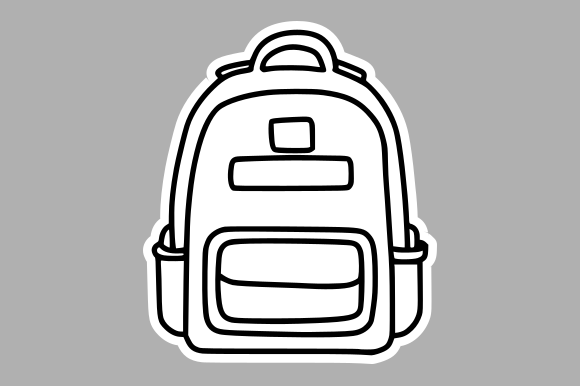
The rustic school backpack illustration is defined by its hand-drawn character. Every line carries a slight irregularity that gives the image a human touch, as though sketched with pencil or ink on paper. In black and white, the absence of color places emphasis on composition, shading, and contour. This approach creates a visual that feels both nostalgic and practical, evoking a sense of craftsmanship rather than mass production.
For the user, this translates into an asset that works well in contexts where you want to communicate simplicity, durability, or a back-to-basics message. The illustration often features details such as leather straps, canvas texture, metal buckles, or stitched seams—elements that reinforce the “rustic” theme. Because the style is monochrome, it integrates seamlessly into designs that already use limited color palettes or rely on high contrast for readability.
Comparing the Hand-Drawn Style with Other Illustration Formats
To evaluate whether this illustration is right for your project, it helps to consider how it compares with other common visual formats. Each approach has its own set of tradeoffs, and the best choice depends on your application, audience, and production constraints.
Hand-Drawn Black and White vs. Full-Color Digital Illustrations
Full-color digital illustrations offer vibrancy and can convey mood through hue, saturation, and lighting. They are excellent for attracting attention in saturated feeds or for products that rely on color branding. However, they can also feel more generic if the style is too polished or widely used. The rustic school backpack illustration, by contrast, stands out through its restraint. In black and white, it forces the viewer to focus on form and detail. This can be an advantage in editorial layouts, instructional materials, or any context where you want to avoid visual noise. On the downside, if your project requires color to communicate information—such as identifying different backpack compartments or materials—a monochrome sketch may not suffice.
Hand-Drawn Style vs. Photography
Photography offers realism and immediate recognition. A high-resolution photo of an actual rustic backpack shows fabric weave, wear patterns, and lighting effects that no illustration can replicate exactly. For e-commerce or product catalogs, photography is often the default choice because customers expect to see the actual item. However, a hand-drawn illustration gives you control over emphasis. You can simplify or exaggerate features to highlight the backpack’s character. For example, if you want to emphasize the stitching on a leather patch, you can draw it with heavier lines. In a photo, that detail might get lost in shadows. The tradeoff is that illustrations require more interpretation from the viewer, which may reduce immediacy but increase engagement.
Black and White vs. Grayscale or Sepia
Pure black and white, as offered in the SVG and EPS files for this illustration, provides maximum contrast. This makes it ideal for printing on uncoated paper, screen printing, or any medium where color registration is a concern. Grayscale adds subtlety but can appear muddy when printed at low resolution. Sepia or other monochrome tints introduce warmth but limit your ability to recolor the asset for different brand palettes. The black-and-white hand-drawn style gives you the most flexibility for overlays, masks, and recoloring in design software because the underlying lines remain crisp and distinct.
Strengths of the Rustic School Backpack Illustration
Several practical strengths make this illustration a worthwhile choice for many creative projects.
- Scalability without quality loss. Because the asset is available in SVG and EPS formats, you can resize it from a small icon to a large poster without losing detail. This is especially valuable if you are designing for multiple touchpoints—web, print, signage—and need a consistent visual.
- Transparency and layering. The transparent PNG format allows you to drop the illustration onto any background without halos or awkward edges. This speeds up compositing in tools like Photoshop, Keynote, or Canva.
- Versatility across project types. Whether you are creating a sticker, an infographic, a slide deck, or a promotional flyer, the hand-drawn aesthetic adds a handcrafted feel that can differentiate your work from templated designs.
- Print-friendly. For screen printing, risography, or one-color print runs, the black-and-white line art is ideal. It avoids the cost and complexity of four-color process printing while still delivering a striking visual.
- Speed of integration. With high-quality JPG and transparent PNG files provided, you can use the illustration immediately without needing to trace or clean up rough sketches.
Limitations and Tradeoffs to Consider
No single asset fits every scenario, and the rustic school backpack illustration has its own constraints. Being aware of these helps you avoid mismatches and frustration later in your workflow.
Limited color information. If your brand relies heavily on color to convey meaning or emotion, a black-and-white illustration may feel incomplete. You can always recolor the SVG or EPS in vector software, but the original lines are designed to work without color. Adding fill colors may obscure the hand-drawn quality that makes the illustration appealing in the first place.
Detail level for small sizes. While vectors scale up beautifully, scaling down a very detailed hand-drawn illustration can cause lines to cluster and lose legibility. If you plan to use the backpack as a small icon—say, 24 by 24 pixels—test the illustration at that size first. Some linework may need simplification to remain clear.
Interpretation gap. Not all audiences respond equally to hand-drawn styles. In professional corporate contexts, a sketched illustration might be perceived as informal or unfinished. In educational or creative settings, it may be seen as warm and inviting. Consider who will view your final piece and how they typically engage with visuals.
File handling. While SVG and EPS files are universally supported in professional design tools, some casual users may find them harder to open or edit compared to standard image formats. If your team includes non-designers working in word processors or basic presentation software, the JPG or transparent PNG will be more straightforward to use. However, those formats lose the ability to resize without quality loss.
When the Rustic School Backpack Illustration Is the Right Choice
This illustration works particularly well in the following situations:
- Educational or instructional materials. If you are creating worksheets, infographics, or guides about school supplies, outdoor gear, or organization, the hand-drawn style adds a friendly, non-intimidating tone.
- Branding for small businesses or makers. Brands that emphasize handmade, sustainable, or local values can use this illustration to reinforce their identity. The rustic aesthetic aligns with leather goods, canvas products, or outdoor gear.
- Print projects with limited color budgets. For T-shirts, tote bags, posters, or stickers that are printed in one or two colors, the existing black-and-white line art saves design time and reduces print costs.
- Web design where loading speed matters. Monochrome vectors load faster than high-resolution photographs. If your site needs to be lightweight, using SVG for illustrations helps performance without sacrificing quality.
- Presentations and slide decks. A hand-drawn backpack can serve as a visual anchor for sections about travel, education, preparedness, or nostalgia. It adds visual interest without overwhelming bullet points or data.
When You May Need an Alternative
There are also scenarios where a different visual approach would serve you better.
- Photorealistic product representation. If you are selling backpacks directly and customers need to see fabric texture, zipper placement, or exact proportions, photography or 3D rendering is more appropriate.
- Color-coded data visualization. If the backpack is used as an icon in a chart or map where color conveys meaning (green for eco-friendly, red for warning, etc.), the black-and-white style may work against clarity unless you add custom fills in vector software.
- Very formal or corporate communications. In annual reports or legal documents, a hand-drawn illustration may clash with the expected tone. In those contexts, a clean icon set or infographic with uniform styling is safer.
- Mobile app interfaces with strict style guides. If your app uses highly polished, uniform iconography, a single hand-drawn backpack might feel out of place among flat or outline icons.
How to Get the Most from This Asset
Whether you choose the rustic school backpack illustration for a single project or as part of a broader visual library, a few practical steps help you maximize its value.
Start with the vector format. Open the SVG or EPS in Adobe Illustrator, Affinity Designer, or Inkscape. This allows you to adjust stroke weights, separate elements, and modify details if needed. For example, you might want to isolate the backpack straps or the front pocket to animate or reposition them.
Test legibility at target sizes. Export a version at the exact resolution and dimensions you plan to use. Check that fine lines remain visible, especially if you are printing on textured paper or displaying on low-resolution screens.
Pair with complementary typography. Because the illustration is hand-drawn, choose fonts that share a similar character—serif, slab serif, or handwritten styles often pair naturally. Avoid overly geometric or futuristic typefaces that create visual tension.
Consider a limited color accent. If your project allows, adding a single accent color—such as a warm brown or muted green—to one part of the backpack can retain the hand-drawn feel while introducing brand color. Use the SVG layers to apply selective color without affecting the linework.
Combine with other hand-drawn elements. For a cohesive design language, pair the backpack with other rustic or school-themed illustrations in the same black-and-white style. Consistent line quality across assets strengthens your visual narrative.
Final Considerations for Your Decision
The rustic school backpack illustration in black-and-white hand-drawn style offers a thoughtful alternative to polished digital imagery. Its value lies not in universally outperforming other formats, but in providing a specific aesthetic and practical advantages—scalability, file flexibility, ease of printing, and a human touch—that many projects need. When you compare it with color illustrations, photography, or other monochrome styles, the decision comes down to your project’s tone, audience, and technical requirements.
If your work calls for authenticity, simplicity, or a tactile feel, this asset deserves strong consideration. For situations that demand precise color reproduction, photorealism, or high polish, other options will serve you better. By understanding both the strengths and the tradeoffs, you can select the visual approach that aligns with your goals—and when the hand-drawn backpack fits, the included SVG, EPS, JPG, and transparent PNG files give you everything you need to integrate it smoothly.